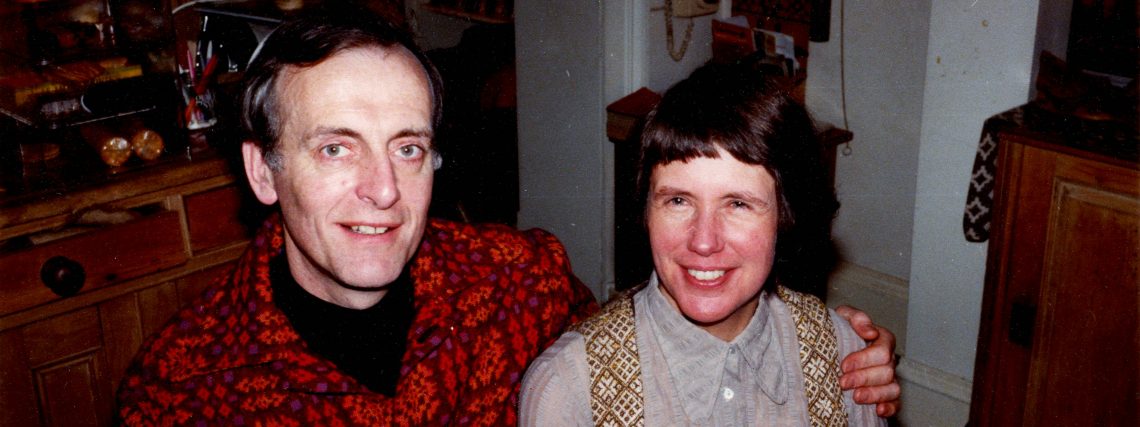
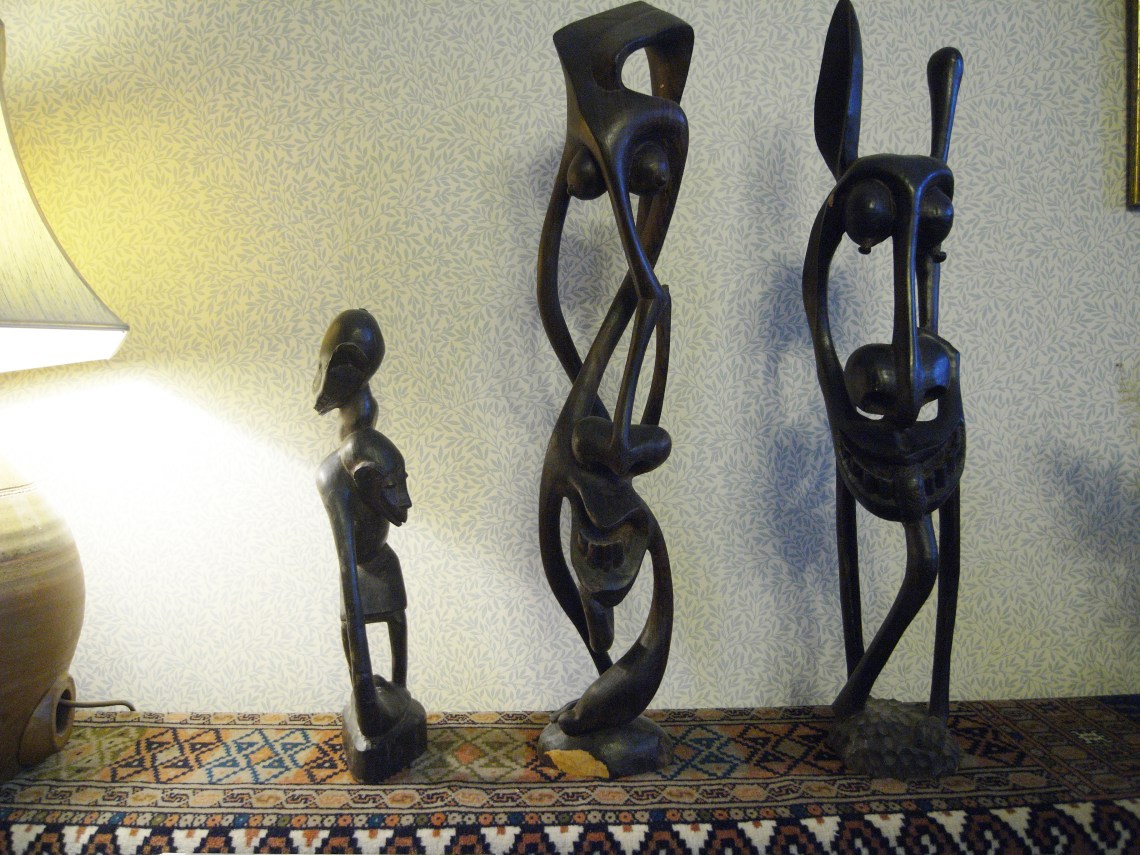
We became interested in Makonde at the time of home schooling, when Alison was visiting the Balmore Trust. She bought the first Makonde we ever acquired, which was the family pole type: a whole lot of people carved into a single bit of vertical wood. It was at the trust shop because Father Ruminski, a Polish catholic missionary, had brought these local Tanzanian sculptures to Britain to sell, to raise money for his mission.
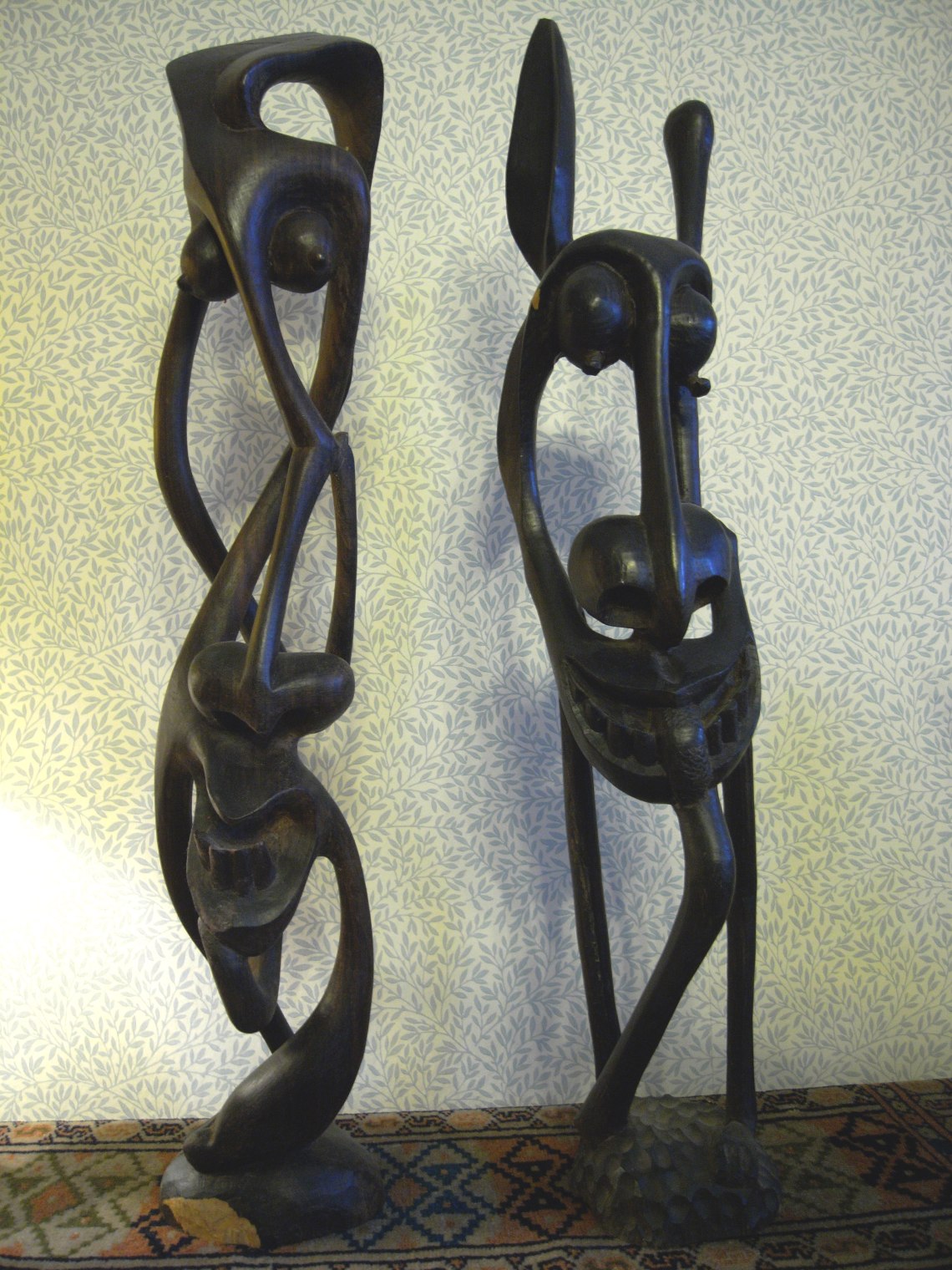
Subsequently there was an exhibition at the Collins Gallery of more modern types of Makonde. Makonde are divided into 3 types – family poles, every day activities, and Shetani (Spirit Carvings). The chap exhibiting these at the Collins Gallery was an Indian chap Moti Malde, who knew a cousin of mine, Barton Worthington; a biologist who had spent a lot of time in the ’40s & ’50s in East Africa doing biological work on behalf of the British, as these were colonies.
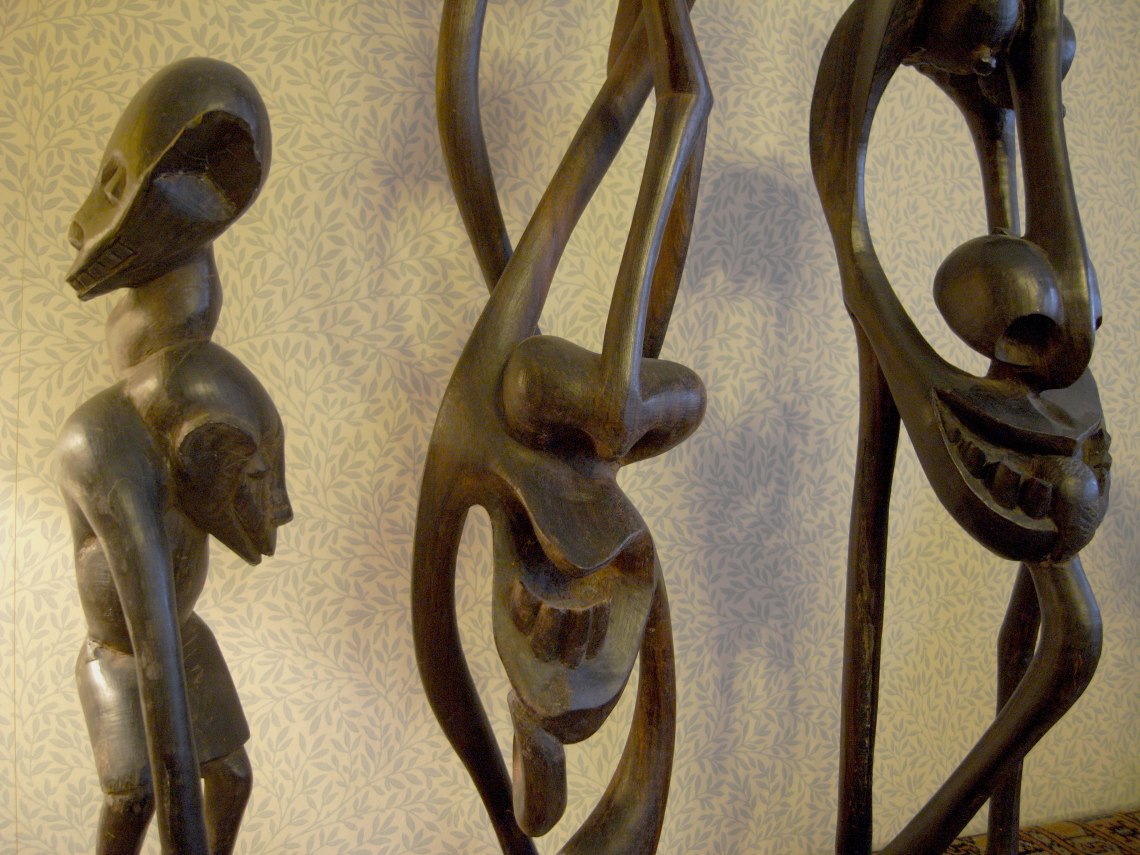
On the way to driving Barnaby to begin at Cambridge University, we stopped en route at Moti Malde’s house in Bedford, and at the end of the day discussed a purchase, which was when I got all three of these. I wrote down the full stories behind each one – I must track them down. I think they were about £150 each. They’re interesting from an anthropological or ethnographic point of view:
Makonde is a tribe, origins from the border of south of Tanzania and north of Mozambique. Because they are of a definite type, collectors want them – they are distinct to that one tribe. It has been so commercialised in the last 50 years that the workshops are now churning them out en masse in Kenya.
They’re very tactile because, being made of Blackwood, they are smooth and tactile… they are really lovely to handle.
Anthony

 The Royal Collection